
Disclosure: We may earn a commission when you buy through links on this page, at no extra cost to you. As an Amazon Associate we earn from qualifying purchases. We don’t accept payment for rankings.
Shopping for the best portable generator in 2026 before the next storm knocks the power out? We read the hands-on tests from Bob Vila, Field & Stream and Consumer Reports, and compared the spec sheets so you don’t have to. Below are five gas and dual-fuel generators that reviewers back, from a quiet 47-pound inverter for camping to a 12,000-watt dual-fuel unit that can carry most of a house, plus the safety rules every generator owner needs to know.
Quick picks
| Award | Generator | Where to buy |
|---|---|---|
| Best overall (quiet inverter) | Honda EU2200i | Home Depot · Amazon |
| Best dual-fuel for home backup | Westinghouse WGen5300DFcv | Home Depot · Amazon |
| Best budget | Wen GN5602X | Home Depot · Amazon |
| Most power for the money | DuroMax XP12000EH | Amazon |
| Best Honda alternative | Yamaha EF2200iS | Amazon |
How we built this list
We don’t test generators ourselves. Instead we compared every hands-on review we could find of each exact model: Bob Vila’s 2026 test of 10 generators at homes, job sites and campsites; Field & Stream’s long-term camping use; Consumer Reports’ published lab results for power delivery, power quality, noise and ease of starting; and Bob Vila’s standalone DuroMax review. A generator only makes this list if a hands-on reviewer recommends it and Home Depot or Amazon sells that exact model today. Every pick here has a 4-stroke engine, so it runs on straight unleaded gas with oil in its own crankcase (no fuel mixing; see our 2-stroke vs 4-stroke guide), and the dual-fuel models also run on propane.
Expert Scorecard
What independent reviewers concluded about each exact model. A Consensus Score (0–100) appears only once at least three experts have reviewed a tool. How the Consensus Score works.
| Generator | What the experts said | Consensus Score |
|---|---|---|
| Honda EU2200i | Bob Vila: Best Overall of 10 tested · Field & Stream: Best Overall gas generator · Consumer Reports: very clean power, especially quiet, handles surges very well | 90 3 experts |
| Westinghouse WGen5300DFcv | Bob Vila: Best Dual Fuel | Needs more reviews 1 expert |
| Wen GN5602X | Bob Vila: Best Bang for the Buck · Consumer Reports: handles surges very well, clean power, average noise | Needs more reviews 2 experts |
| DuroMax XP12000EH | Bob Vila: 7.5/10, strong value for home backup | Needs more reviews 1 expert |
| Yamaha EF2200iS | Bob Vila: Best Inverter · Consumer Reports: clean power, fairly quiet, handles surges very well | Needs more reviews 2 experts |
Last checked October 12, 2026. Know of an expert review we missed? Tell us.
1. Honda EU2200i — Best portable generator overall
Why reviewers love it: This is the generator the experts agree on most. Bob Vila tested 10 generators and named the EU2200i its favorite: its tester said it started on the first pull every time, ran a refrigerator for about four hours on roughly half a gallon of gas in eco mode, and powered a table saw and miter saw at once. Field & Stream’s reviewer, who took it on a family camping trip (and used an older Honda on a remote job in Alaska), also picked it as the best gas generator and listed no downsides. Consumer Reports’ published lab results rate its power as especially clean, with steady voltage (good news for electronics), say it handled surges very well, and call it especially quiet from 23 feet. It weighs about 47 pounds and two can be linked for more power.
- Output: 2,200 starting / 1,800 running watts (inverter)
- Engine: Honda GXR120, 121cc 4-stroke (straight gas, separate oil); recoil (pull) start
- Fuel tank and runtime: 0.95 gallon; up to 8.1 hours at a light (25%) load
- Weight: about 47 lb
- Extras: CO-MINDER carbon monoxide shutdown, Bluetooth app for monitoring
- Typical price: about $1,100–$1,200
What to watch for: It’s expensive for the watts. At 1,800 running watts it runs a fridge, lights, a sump pump or a furnace fan, but not central air or a well pump, and it has no electric start, no USB ports and a small tank (Bob Vila’s two cons were no USB and limited fuel capacity). Make sure you’re buying the plain EU2200i; the EU2200i “Companion” adds an RV outlet and is a slightly different model.
2. Westinghouse WGen5300DFcv — Best dual-fuel generator for home backup
Why reviewers love it: Bob Vila named it the best dual-fuel generator in its 2026 test. Its tester had it running in under 20 minutes out of the box, and it started on the first pull on gasoline and the third on propane. He also found it lost less power on propane than the other dual-fuel models. Propane is the big advantage for storm prep: it stores for years without going stale, and a regulator hose comes in the box. The panel has a 120/240-volt selector, a 30-amp twist-lock outlet for a transfer switch, and an RV outlet.
- Output: 6,500 starting / 5,300 running watts on gas; 5,800 / 4,800 on propane
- Engine: Westinghouse 274cc 4-stroke OHV; recoil start
- Fuel tank and runtime: 4.7 gallons; up to 14.5 hours on gas, about 9 hours on a 20-lb propane tank (per Bob Vila)
- Weight: about 136 lb, with fold-down handle and wheels
- Extras: CO sensor with automatic shutdown; listed as EPA and CARB compliant
- Typical price: about $580
What to watch for: It’s loud. Westinghouse advertises 68 dBA, but Bob Vila measured an average of 88.5 decibels at five feet, so it may be too much for a campground or close neighbors. This version is pull-start only; Westinghouse sells a remote electric-start sibling (WGen5300DFc) for more money. With only one expert review of this exact model so far, it doesn’t have a Consensus Score yet.
3. Wen GN5602X — Best budget generator
Why reviewers love it: Bob Vila called it the best bang for the buck. In its test the Wen started on the first pull, and it ran a small travel trailer’s air conditioner, a refrigerator and a microwave at the same time. Consumer Reports’ published results agree it punches above its price: it handled surges very well, delivered especially clean power, and was very easy to start and move, with a fuel gauge, fuel shutoff and low-oil shutoff. It has push-button electric start, a wheel kit, a 30-amp RV outlet and a 30-amp transfer-switch outlet.
- Output: 5,600 starting / 4,500 running watts (gas only)
- Engine: 224cc 4-stroke; electric start with recoil backup
- Fuel tank and runtime: 4.3 gallons; up to 12.5 hours at half load
- Weight: about 120 lb
- Extras: Watchdog CO shutdown sensor, digital meter for volts, frequency and run time
- Typical price: about $380
What to watch for: It’s an open-frame generator, so it’s noisy: Bob Vila measured 88 decibels at five feet, and Consumer Reports rated it neither quiet nor noisy from 23 feet. The electric start only worked after Bob Vila’s team trickle-charged the battery (plan to keep it charged between storms), and the folding handles felt flimsy. It runs on gasoline only, and it has no 240-volt outlet, so it can’t run a well pump or other 240-volt appliances.
4. DuroMax XP12000EH — Most power for the money
Why reviewers love it: If you want to run most of a house through a transfer switch or interlock, this is the big one. Bob Vila’s Tom Scalisi admits he bought it expecting to be disappointed, then found it ran a refrigerator, electronics, a window air conditioner and a 1,500-watt space heater without trouble. He gave it 7.5/10 for its power per dollar, liked the keyed electric start, and said switching between gasoline and propane was quick and simple. Bob Vila’s 2026 roundup also picked it as the best generator for home use. It has a 50-amp outlet for a whole-house transfer switch and a built-in CO sensor.
- Output: 12,000 starting / 9,500 running watts on gas (less on propane)
- Engine: DuroMax 457cc 4-stroke OHV; keyed electric start with recoil backup
- Fuel tank and runtime: 8.3 gallons; about 8 hours per tank in Bob Vila’s review
- Weight: about 224–238 lb (sources differ); flat-free wheels
- Typical price: Bob Vila saw it at about $1,400, and it’s often discounted
What to watch for: It’s heavy, it measured about 90 decibels a few feet away, and it has no hour meter (so you track oil changes yourself), no outlet covers and only one standard 120-volt duplex outlet. The pull start takes real effort. Bob Vila’s review dates from late 2023, and DuroMax now also sells the larger XP13000EH; we found the XP12000EH only on Amazon (Home Depot shows the XP13000EH instead).
5. Yamaha EF2200iS — Best Honda alternative
Why reviewers love it: Yamaha’s 2,200-watt inverter is the Honda’s closest rival, and Bob Vila named it the best inverter generator in its 2026 test. It measured 71 decibels at five feet and kept a refrigerator running and batteries charged during an outage. Consumer Reports’ published results for the EF2200iS (CO-sensor version) rate its power as especially clean, say it handled surges very well, and call it fairly quiet at 23 feet. Its bigger 1.24-gallon tank is rated for up to 10.5 hours at a quarter load, longer than the Honda, and it has a three-handle frame for two-person carrying and a built-in RV outlet.
- Output: 2,200 peak / 1,800 running watts (inverter)
- Engine: Yamaha 79cc 4-stroke; recoil start
- Fuel tank and runtime: 1.24 gallons; up to 10.5 hours at 25% load (Yamaha rating)
- Weight: about 55 lb
- Typical price: about $1,300
What to watch for: It’s about eight pounds heavier than the Honda and usually no cheaper. You need two units linked in parallel to run a 30-amp RV at full capacity. Consumer Reports notes it may have limited distribution, and we only found the exact model on Amazon.
Portable generator buying guide
Safety first: carbon monoxide kills
Run a gas generator outdoors only, far from windows, doors and vents, and never in a garage, basement, shed, carport or on a porch, even with the door open. Generator exhaust contains carbon monoxide, which you can’t see or smell. The U.S. Consumer Product Safety Commission advises placing it at least 20 feet from the house with the exhaust pointed away. Buy a model with an automatic CO shutoff (four of our five picks list one, and Consumer Reports tested the Yamaha’s CO-sensor version), but treat it as a backup, not a substitute: keep battery CO alarms inside the house too. To power household circuits, have an electrician install a transfer switch or interlock; never plug a generator into a wall outlet.
How many watts do you need?
Add up the running watts of everything you want on at once, then check the biggest motor’s starting watts (fridges, sump pumps and AC units surge when they kick on). A 2,000-watt inverter covers a fridge, lights, phones and a few small things. Around 4,500–5,500 running watts adds a window AC, microwave or furnace blower. Running central air, an electric water heater or a well pump through a transfer switch usually takes 9,000 watts or more, and a 240-volt outlet.
Inverter vs. open-frame
Inverter generators (the Honda and Yamaha) are enclosed, much quieter and make very clean power, and their engines slow down at light loads to save fuel. Open-frame generators (the Westinghouse, Wen and DuroMax) are louder and heavier, but they give you far more watts per dollar, which is why they’re the usual choice for home backup.
Gas, propane or dual-fuel?
Gasoline gives full power but goes stale in storage, and stations may be closed after a big storm. Propane stores almost indefinitely in tanks you can swap at the hardware store, but it makes a little less power. A dual-fuel generator lets you use whichever you have. All five picks have 4-stroke engines that take straight unleaded gas and separate engine oil; check the oil before every use, and follow the maker’s storage instructions in the manual.
What about a battery power station?
Battery “solar generators” are silent, make no fumes and can be used indoors, which is why Bob Vila included one in its test. But they hold far less energy than a tank of gas, take hours to recharge, and cost much more per watt. For multi-day outages, a gas or dual-fuel generator is still the practical choice; a power station is a great add-on for phones, CPAP machines and laptops.
Frequently asked questions
What is the best portable generator for home backup?
For most homes, a 5,000–6,000-watt dual-fuel model like the Westinghouse WGen5300DFcv is the sweet spot: enough to run a fridge, sump pump, lights and a window AC, and it can run on propane. If you want to power most of the house through a transfer switch, step up to the DuroMax XP12000EH.
Is the Honda EU2200i worth the money?
If you want the quietest, most reliable small generator, reviewers say yes: it’s the only pick here with a Consensus Score (90 from 3 experts). If you need more watts for home backup, you’ll get far more power for less money from an open-frame dual-fuel model.
Can I run a generator in my garage with the door open?
No. Carbon monoxide builds up quickly in a garage even with the door open and can seep into the house. Run it outside, well away from the home, with the exhaust pointed away from windows and doors.
Do these generators need mixed gas?
No. Every generator on this list has a 4-stroke engine, which runs on regular unleaded gasoline with oil in a separate crankcase. Mixed fuel is for 2-stroke tools like most chainsaws and leaf blowers.
The bottom line
Get the Honda EU2200i if you want the quiet, clean-running generator the experts agree on most, for camping, tailgates or keeping the fridge and lights on. For real home backup, the dual-fuel Westinghouse WGen5300DFcv is the best balance of power, price and propane flexibility, the Wen GN5602X is the budget pick, and the DuroMax XP12000EH brings whole-house power. Whatever you buy, run it outside and far from the house. If a storm leaves trees down too, see our best gas chainsaws and best battery chainsaws.
Sources: Bob Vila (best portable generators, 2026), Bob Vila (DuroMax XP12000EH review), Bob Vila (best inverter generators, 2026), Field & Stream (best gas generators), Consumer Reports (Honda EU2200i), Consumer Reports (Wen GN5602X), Consumer Reports (Yamaha EF2200iS), Pro Tool Reviews (inverter generator specs), U.S. Consumer Product Safety Commission (generator safety). Specs and prices were accurate as of October 2026; check the retailer for current pricing.
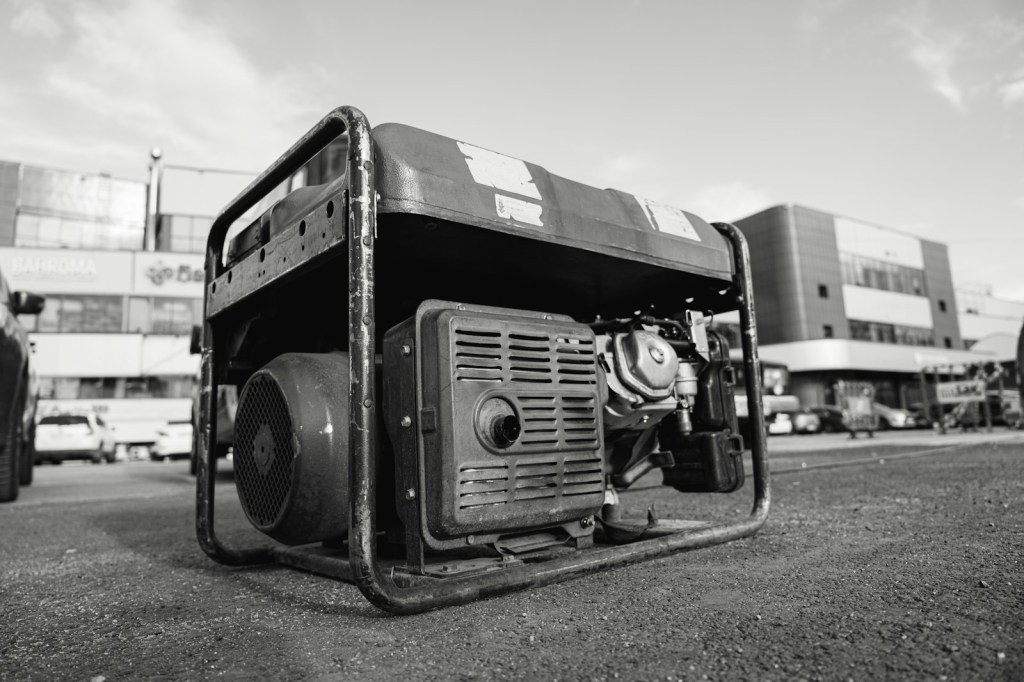
Header photo: Dima Solomin on Unsplash.


Leave a Reply